The Evolution of Running Shoe Technology
Running shoes have undergone a remarkable transformation over the last few decades, with significant advancements in materials and design. Back in 1975, Brooks made history by introducing the EVA (ethylene vinyl acetate) midsole in the Villanova model, reshaping what runners could expect from footwear. Before this innovation, the focus was largely on practicality and performance, often at the expense of comfort. Rigid rubber outsoles dominated, leaving little room for shock absorption. EVA changed the game, becoming the industry standard due to its lightweight properties and superior cushioning. Today, we find ourselves in a new era dubbed the “super foam renaissance.” Modern midsole technologies have moved beyond traditional EVA, incorporating lighter and bouncier materials. In just the past decade, the running shoe market has shifted towards supercritical foams, nitrogen-infused EVA, and PEBA foam, making the choices more varied and intriguing for athletes. This evolution hasn't just improved softening and support; it has allowed shoe designs to expand well beyond World Athletics' 40mm height limit, leading to a new breed of high-performance trainers, some even deemed “illegal” for competitive events but fun for training. The variety of options now available can be overwhelming. Runners can choose from lightweight trainers, stability shoes, and highly cushioned models dedicated to specific purposes, whether for racing, everyday training, or recovery. It’s essential to recognize that understanding foam technology is just one part of selecting the right shoe. To help navigate this convoluted landscape, we conducted assessments with various runners of diverse skill levels, paces, and training regimens. Together, we’ve created a curated list to guide you in selecting the best cushioned shoe tailored to your unique workout plan. As runners, having the right footwear isn’t just about comfort; it's crucial for performance and injury prevention. What this means for you is that investing time and effort into selecting a pair that aligns with your needs could pay dividends in your overall running experience.Discovering the Best Cushioned Running Shoes
**Top Picks for Every Running Need** When evaluating footwear, specific categories can help narrow down the options, and that’s evident in this selection. **Best Overall: Brooks Glycerin 23** The Brooks Glycerin 23 has emerged as a top choice, balancing comfort and performance. Priced at $175, this shoe accommodates a wide range of runners, featuring plush cushioning that’s perfect for both short sprints and longer distances. For more details on the men's version, visit Brooks [here](https://www.brooksrunning.com/en_us/mens/shoes/road-running-shoes/glycerin-23/110476.html), or check out the women's model [here](https://www.brooksrunning.com/en_us/womens/shoes/road-running-shoes/glycerin-23/120465.html). **Best Value: New Balance Ellipse v1** If you're looking for quality without breaking the bank, the New Balance Ellipse v1 stands out. This option delivers solid performance, making it ideal for everyday use and recreational runners. The men's model can be found [here](https://www.newbalance.com/pd/ellipse/MELPSV1_RU-FTW-802882.html), while the women's version is available [here](https://www.newbalance.com/pd/ellipse/WELPSV1_RU-FTW-802883.html). **Best for Stability: Nike Structure Plus** For those needing extra support, the Nike Structure Plus is a solid contender. Its stability features cater well to overpronators and offer a secure fit, instilling confidence during runs. Check the men's model [here](https://www.nike.com/t/structure-plus-mens-road-running-shoes-XEfeTqfe/HQ3048-003) and the women’s model [here](https://www.nike.com/t/structure-plus-womens-road-running-shoes-RZ2IJTOq/HQ3049-500). **Best Low Drop: Altra Fwd Via 2** The Altra Fwd Via 2 is the gem for runners who prefer a lower drop. With its zero-drop platform, this shoe promotes a natural running posture, appealing to those who prioritize form. Discover the men’s style [here](https://www.altrarunning.com/en-us/road/mens-fwd-via-2/AL0A85SR.html) and the women’s version [here](https://www.altrarunning.com/en-us/road/womens-fwd-via-2/AL0A85TW.html). **Best for Long Runs: Nike Vomero 18** Long-distance enthusiasts looking for cushioning should turn their attention to the Nike Vomero 18. Engineered for comfort over extended periods, this shoe minimizes fatigue, making it a favorite for marathon preparations. Explore the men's variant [here](https://www.nike.com/t/vomero-18-mens-road-running-shoes-NzWnvcC8/HM6803-007), or find the women’s model [here](https://www.nike.com/t/vomero-18-womens-road-running-shoes-7rbVWb/HM6804-100). These selections reflect diverse needs, allowing every runner to find a shoe that complements their unique style and running regimen. Whether you're hitting the pavement for training or casual runs, these options deliver on performance and comfort.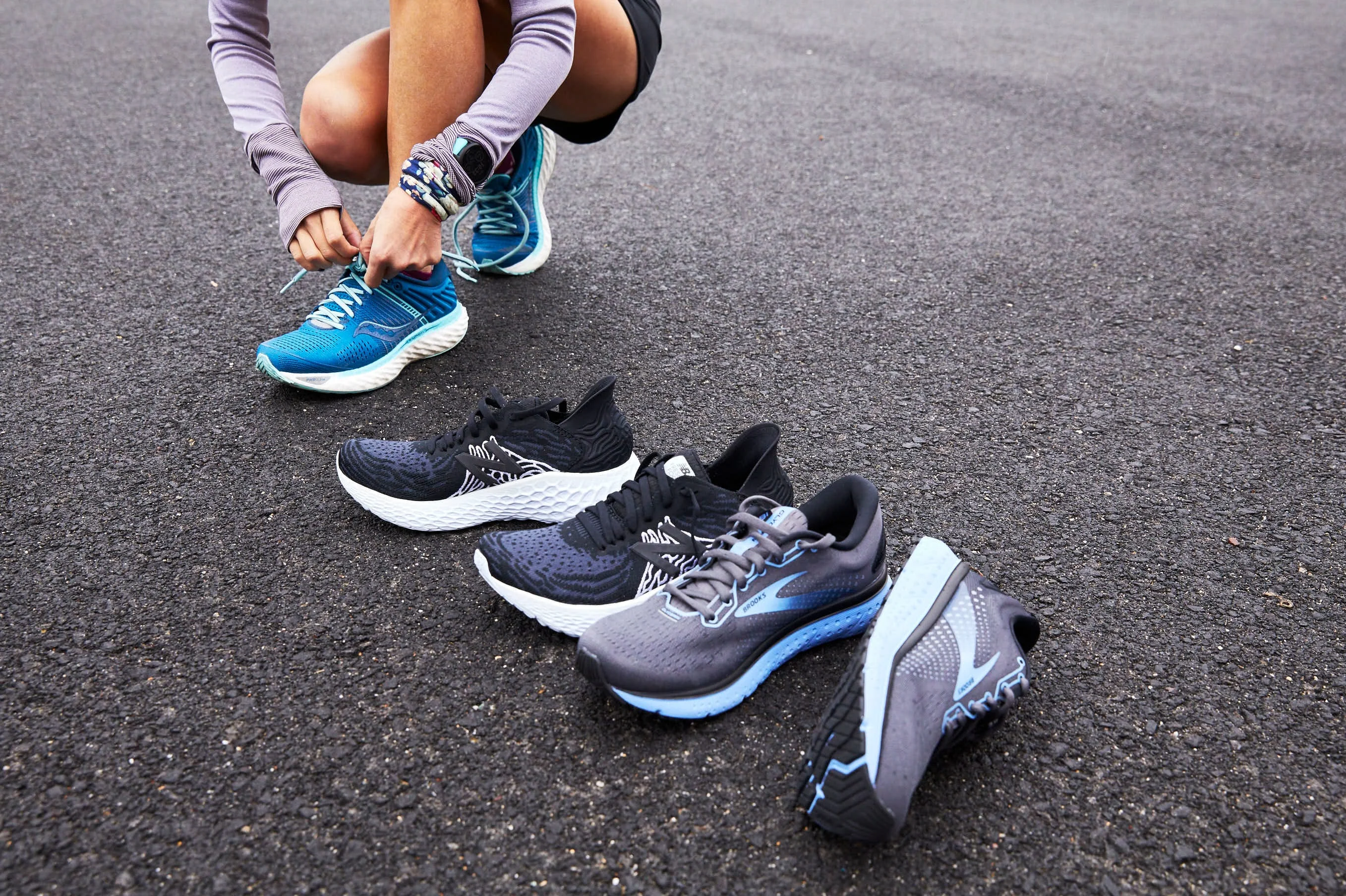
As the Running Reviews Editor and a seasoned runner, I based my shoe selections on both personal insights and input from our team of editors and testers. We've tapped into a network of over 300 local runners from diverse backgrounds, which allows us to gather a comprehensive range of feedback on the shoes we review.
The shoes under review here received notable acclaim for their comfort and performance across varied settings, whether on roads, trails, during workouts, or competitive races. From marathons to fast-paced tempo runs, they delivered consistently strong results.
Full Reviews

Pros
- Generous cushioning in the forefoot for a balanced and supportive experience
- DNA Tuned foam offers both responsiveness and durability

Cons
- A bit heavier than standard trainers, which some might dislike

Key Specs
| Weight | 10.6 oz (M), 8.7 oz (W) |
| Drop | 8 mm |
| Heel Stack | 38 mm |
| Forefoot Stack | 30 mm |
Once the top pick for Brooks in cushioning—now surpassed by the Glycerin Max—the Glycerin 23 remains a favored option for daily training. It’s slightly heavier than the Ghost 17, but benefits from lighter, more responsive DNA Tuned foam. Personally, I find it ideal for tackling long distances on the hilly back roads around here.
The DNA Tuned foam features dual-cell technology, employing smaller foam cells in the forefoot for softer landings and larger cells in the heel to enhance responsiveness. Notably, the Glycerin 23 has 2mm more nitrogen-infused cushioning in the forefoot than its predecessor, offering a more stable ride thanks to its wider base. This could be a serious consideration for any runner looking for enhanced comfort without sacrificing performance.